
Technology
Colossus: xAI’s Revolutionary Leap in AI Training Technology.


- Colossus: xAI’s Groundbreaking AI Training System
- Elon Musk’s artificial intelligence company xAI has unveiled Colossus, a colossal AI training system powered by 100,000 Nvidia H100 GPUs. This massive supercomputer, assembled in just 122 days, is being hailed as the world’s most powerful AI training cluster. Colossus is designed to advance xAI’s large language model Grok and challenge industry leaders like OpenAI and Google in the race for AI supremacy.
- Impressive Technical Specifications
- The H100 chips powering Colossus are known for their exceptional performance in AI workloads. Equipped with Transformer Engine modules optimized for running AI models based on the Transformer neural network architecture, these GPUs deliver breakthrough performance. xAI plans to double Colossus’s capacity in the coming months by adding 50,000 of Nvidia’s more advanced H200 series chips, which are approximately twice as powerful as the current H100s.
- Strategic Implications for xAI
- Colossus represents a significant leap forward for xAI in the competitive AI landscape. The system is expected to significantly enhance the capabilities of xAI’s language models, potentially facilitating the development of more advanced versions of Grok. Musk hopes that Grok-3, which will be trained on Colossus, will become “the most powerful AI in the world” by December 2024. This ambitious goal underscores xAI’s strategy to challenge established players like OpenAI and Google. The
- development of Colossus also has potential implications for Tesla, as many experts speculate that Grok could eventually power the AI behind Tesla’s humanoid robot Optimus.
Last Updated on September 4, 2024 by Grace Simon

Technology
Why Half of All M2 Buyers Refuse to Give Up the Clutch Pedal
M CEO Frank van Meel ties the M2 manual take rate directly to the M3 CS Handschalter.

Every second G87 BMW M2 sold in the United States comes with a manual transmission, according to M CEO Frank van Meel. He didn’t offer that number as a standalone fact. He used it to explain a separate decision: why BMW built the M3 CS Handschalter, a limited-run manual-only special edition that sold out almost as soon as it went on sale.
A 50 percent take rate on a manual gearbox would be a remarkable number for any car in 2026. The M2 is a sports coupe that could have shipped without a clutch pedal at all and nobody at BMW would have batted an eye, given how the rest of the segment has gone. Van Meel didn’t frame it as a surprise, though. He used it as evidence for a broader point about U.S. demand, then pointed straight at the payoff: “Rear-wheel drive and a manual transmission are the dream combination for many purists. That is why we also made a limited model with a manual transmission for the U.S. Demand was enormous; the car was practically sold out immediately.”
That “limited model” isn’t a special M2. It’s the M3 CS Handschalter, a rear-wheel-drive-only, manual-only version of the outgoing M3 built specifically for North America. Van Meel is drawing a straight line between the two cars: the M2’s take rate is the data point, the CS Handschalter is what BMW did about it. Whether that translates into a manual staying on the order sheet for the next M3, or the next M2, is a separate question van Meel didn’t answer directly. But the number he did give is hard to argue with, and it’s worth putting the CS Handschalter in context alongside the rest of BMW’s shrinking manual lineup.
Where The CS Handschalter Fits

The M3 CS Handschalter starts at $108,450 and undercuts the automatic, xDrive-based M3 CS by roughly $11,000. It’s rear-wheel drive only, manual only, built specifically for North America, and BMW hasn’t said how many it’s making. We’re estimating around 600-700 units. It also arrives as the current G80 M3’s likely send-off: the model is expected to wind down around February 2027, and its replacement is widely reported to drop the manual entirely in favor of xDrive-only, automatic-only power. If that holds, the CS Handschalter isn’t just a limited edition riding on the M2’s popularity. It’s the last manual M3 BMW will ever build.
The Z4 M40i used to round out BMW’s manual lineup, but that ended in the spring, when the G29 went out of production with a Final Edition and no confirmed successor. That leaves the M2, base M3, and base M4 as the only manual BMWs sold in the U.S. today, and with the M3’s replacement reportedly going automatic-only, the M2 may end up the one holdout still standing once the CS Handschalter’s run is over.
Now the question is this: it’s the BMW M2 manual story getting ready for a new chapter? Time will tell…
Last Updated on August 26, 2026 by Grace Simon
Finance
Who Is Satoshi Nakamoto? The Mystery Behind Bitcoin’s Creator
Satoshi Nakamoto is the pseudonym for the creator of Bitcoin, who published the original whitepaper in 2008.
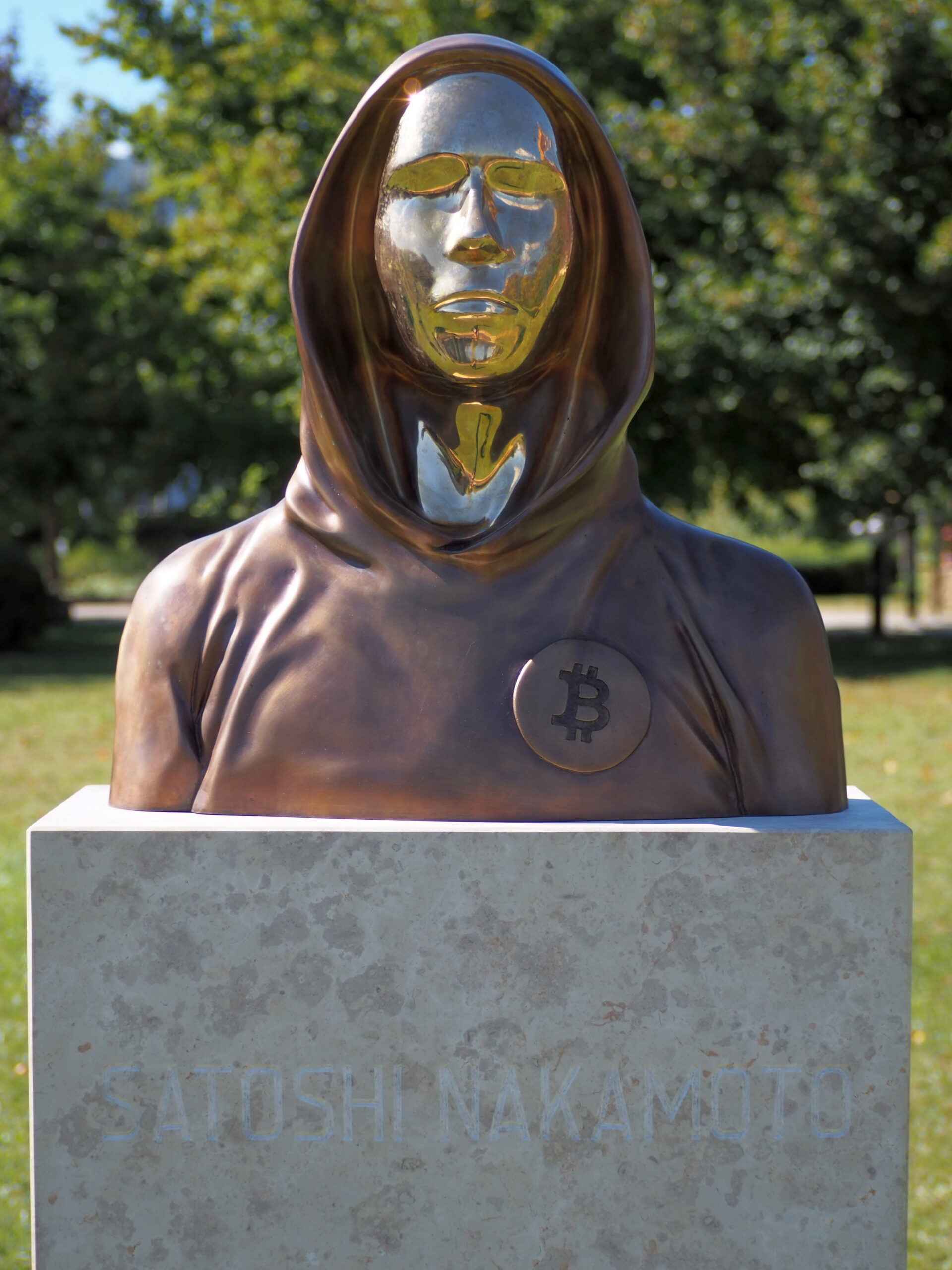
Bitcoin began with a whitepaper and a name that has never been tied to a confirmed identity. Satoshi Nakamoto, the creator of Bitcoin, introduced the network in 2008 and disappeared from public communication a few years later.Since then, researchers and journalists have tried to uncover who Satoshi might be, but no claim has been proven.
What remains clear is the system itself. The design outlined in the Bitcoin whitepaper introduced a decentralised method for transferring value without intermediaries.
Who Is Satoshi Nakamoto? The Mystery Behind Bitcoin’s Creator
In October 2008, during the financial crisis that plagued the global economy, a person or a group using the name Satoshi Nakamoto published a paper titled Bitcoin: A Peer-to-Peer Electronic Cash System.
The document described a system for sending digital money directly between people without relying on banks or other intermediaries.A few months later, in January 2009, the first version of the Bitcoin software went live.
The network began processing transactions and recording them on a public ledger now known as the blockchain.Despite introducing Bitcoin, the identity behind the name Satoshi Nakamoto has never been confirmed. The name is widely considered a pseudonym and may refer to a single developer or to a group working together on the project.
Satoshi communicated via email and the BitcoinTalk forums during Bitcoin’s early development.
These discussions focused on technical questions, bug fixes, and network design. By 2011, those communications stopped. Since then, no verified message from Satoshi Nakamoto has appeared.More than fifteen years later, the mystery remains unresolved.
What is known is that the system described in the 2008 whitepaper continues to operate through a distributed network of participants who maintain the Bitcoin protocol.
Understanding who Satoshi Nakamoto is, or why the creator chose to remain anonymous, helps explain how Bitcoin was designed and why decentralized systems continue to attract global attention.
The Origin Story: Solving the Double-Spend Problem
Before Bitcoin, digital cash struggled with a problem known as double spending. Unlike physical money, digital files can be copied. Without a reliable way to verify ownership, the same digital funds could potentially be sent to multiple people.
Earlier online payment systems avoided this issue by relying on a central authority. Banks or payment processors tracked balances and confirmed whether a transaction was valid before allowing it to go through.Satoshi Nakamoto proposed another way in the 2008 Bitcoin white paper.
Instead of trusting a central institution, Bitcoin relies on a peer-to-peer (P2P) network. In this model, participants collectively verify transactions. Payments are broadcast across the network and grouped into blocks, which are then recorded on the shared block chain ledger.
To secure this ledger, Bitcoin employs Proof of Work (PoW).
In this process, specialized computers called miners compete to solve complex cryptographic puzzles. The first miner to solve the puzzle earns the right to add a new block to the blockchain.
Each block links to the previous one, creating a chronological chain of records. Altering past transactions would require repeating the same computational work across the network, which makes tampering extremely difficult.
Genesis Block
The Bitcoin network began operating on January 3, 2009, when Satoshi Nakamoto mined the first block. This block is known as the Genesis Block.
Satoshi included a short message inside that block: “The Times 03/Jan/2009 Chancellor on brink of second bailout for banks.
”The line references a headline from the British newspaper The Times published that day.
It serves as a timestamp that confirms when the first block was created. The reference also reflects the financial climate at the time, when governments were responding to the global banking crisis.
From that point onward, the Bitcoin network began processing transactions through a distributed system maintained by its participants. The principles outlined in the original whitepaper still underpin how the network operates today.
The Top Candidates: Who Could It Be?
Over the years, many people have tried to link real identities to the name Satoshi Nakamoto. Journalists, researchers, and early Bitcoin developers have examined emails, forum posts, writing style, and technical history for clues. None of these investigations has produced verifiable proof.
The simplest way to prove Bitcoin’s authorship would be to sign a message using the private keys associated with the earliest Bitcoin addresses.Those keys have never been used publicly for that purpose.
As a result, the identity behind Satoshi Nakamoto remains unconfirmed.
Several names recur in discussions of Bitcoin’s origins.
Hal Finney
Hal Finney was a well-known cryptographer and an early participant in the Bitcoin project.
Before Bitcoin, he worked on privacy tools such as Pretty Good Privacy (PGP).
Finney downloaded the Bitcoin software shortly after its release and helped test the system in its early days.
On January 12, 2009, Finney received the first recorded Bitcoin transaction from Satoshi Nakamoto.
Because of his technical expertise and close involvement with the project, some observers have speculated about a deeper connection.
Finney repeatedly stated that he was not Satoshi Nakamoto.
Nick Szabo
Nick Szabo is a computer scientist and legal scholar who proposed a digital currency concept called Bit Gold in the late 1990s. The design included ideas such as cryptographic proof and decentralized verification, which later appeared in Bitcoin’s architecture.
Because Bit Gold shares several conceptual similarities with Bitcoin, Szabo’s name is often mentioned in discussions about Satoshi Nakamoto. Szabo has publicly denied being the creator of Bitcoin.
Len Sassaman
Len Sassaman was a cryptographer and an active participant in the cypherpunk movement. Cypherpunks focused on privacy, encryption, and digital freedom during the early years of the internet. Sassaman worked on several privacy-related technologies and collaborated with other researchers in the same field.
Interest in Sassaman resurfaced after a 2024 HBO documentary explored different theories about Bitcoin’s origins. The program discussed several individuals connected to the cypherpunk community, including Sassaman. However, no evidence has confirmed that he created Bitcoin.
Craig Wright
Craig Wright, an Australian computer scientist, publicly claimed to be Satoshi Nakamoto in 2016. His claims have been widely challenged by members of the Bitcoin community and by researchers examining the available evidence.
In March 2024, BBC reported that the High Court of England and Wales ruled that Wright is not Satoshi Nakamoto.
The court determined that the evidence presented did not support his claim to have written the Bitcoin whitepaper or created the Bitcoin protocol.
Because Bitcoin relies on public key cryptography, authorship could be proven by signing a message with the private keys linked to Satoshi’s early Bitcoin addresses. No individual has produced such proof.
For that reason, the identity behind Satoshi Nakamoto remains unknown.
The “Patoshi” Pattern: How Much Bitcoin Does Satoshi Have?
A long-standing question in Bitcoin’s history is how much Bitcoin Satoshi Nakamoto mined in the network’s earliest days. The exact figure is unknown, but researchers have examined the first blocks on the blockchain to form estimates.
One of the most referenced studies comes from blockchain researcher Sergio Demian Lerner. While analyzing early mining activity, Lerner noticed a repeating pattern in the way certain blocks were produced.The data suggested that a single miner generated a large share of those early blocks. He later referred to this activity as the Patoshi pattern.
Based on this analysis, some researchers estimate that Satoshi may have mined around 1.1 million Bitcoin in the first year of the network. At that time, very few people were mining, and the system had only just begun operating.
Mining is the process that adds new blocks of transactions to the blockchain.
Computers compete to solve cryptographic puzzles, and the first machine to solve one earns the right to add the next block and collect the block reward.
For a closer look at the process, this guide on how Bitcoin mining works explains how mining secures the network and introduces new Bitcoin into circulation.
The coins linked to the Patoshi pattern are notable for another reason.
They have never moved. The addresses believed to belong to early miner remain inactive more than a decade later. Because Bitcoin’s blockchain is public, any transfer from those addresses would be visible to anyone monitoring the network.
Why those coins remain untouched is still unclear.
The private keys may have been deliberately left unused, lost over time, or simply held without the intention of spending them.
Since the identity of Satoshi Nakamoto has never been confirmed, the reason those coins remain dormant remains unknown.
The Patoshi pattern remains one of the most discussed clues when researchers study Bitcoin’s earliest blocks.
Why Did Satoshi Nakamoto Disappear
Satoshi Nakamoto played an active role in Bitcoin’s development during its first years. Much of that work took place through emails and posts on forums and the cryptography mailing list.
The discussions focused on practical issues. Developers asked questions about the software, reported bugs, and suggested improvements to the protocol.
By late 2010, Satoshi began reducing involvement in the project. Responsibility for maintaining the Bitcoin codebase gradually shifted to other contributors. One of them was Gavin Andresen, who later became a lead developer working on the protocol.
Around that period, a debate emerged about whether Bitcoin should accept donations from WikiLeaks. The organization had started facing financial restrictions from traditional payment networks. Some supporters suggested Bitcoin as an alternative. Satoshi expressed concern about the idea in a forum post from December 2010.
The message suggested that the network was still small and could attract unwanted attention if it became tied to a high-profile political issue.
After that point, Satoshi’s public messages became less frequent. In April 2011, Satoshi sent what appears to be one of the final known emails to Gavin Andresen, stating that they had “moved on to other things.” No confirmed communication from Satoshi Nakamoto has appeared since.
Some observers point to Bitcoin’s structure when discussing this disappearance.
Bitcoin was designed as a decentralized system. No single individual controls the network. If a widely recognized founder had remained closely involved, that person might have been seen as a central authority.
Satoshi’s departure removed that possibility. Development continued through a broader group of contributors working on the open-source code. Over time, miners, node operators, developers, and users all became part of maintaining the network.
More than a decade later, Bitcoin continues to operate without its original creator. The system runs through the same decentralized model described in the 2008 whitepaper.
For more updates from the GRACYNEWS, follow us on Facebook and Instagram
Last Updated on August 26, 2026 by Grace Simon
Business
Nearly three million Teslas recalled in China over hidden door handles
The world’s carmakers are struggling to compete with China
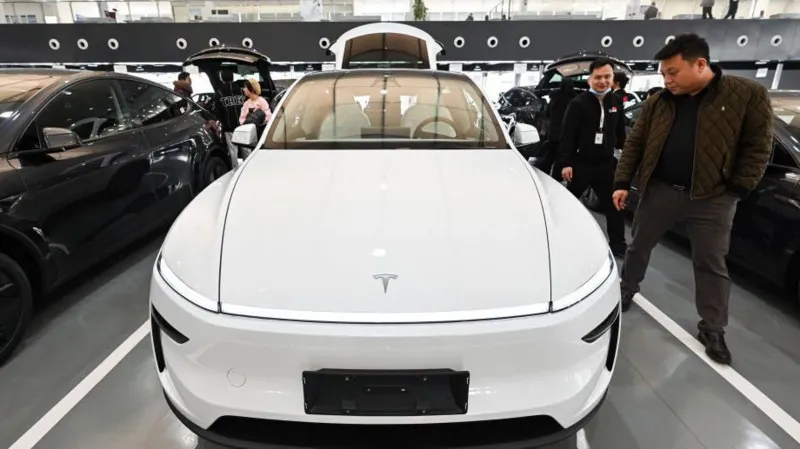
Minimalistic door handles became a signature feature of electric vehicles (EVs), but the controversial designs are now at the centre of China’s biggest car recall, affecting more than 4 million vehicles.
The recall, which includes 2.98 million Chinese-made Teslas, follows safety concerns that the hidden door handles are difficult to locate and open in emergency situations.
Other brands affected by the recall include Chinese carmakers XPeng, Xiaomi and Geely.
The recalled vehicles will have a warning label stuck on the interior door and receive a software update to automatically lower the windows in a crash.
The designs have come under scrutiny after two fatal crashes in China involving Xiaomi EVs, in which power failures were suspected to have prevented doors from being opened.
Tesla said in a statement on Friday that it was recalling some of its Model 3, Y, S and X vehicles due to door handles that are “difficult to identify and operate because their colour is similar to the interior trim”.
“In extreme situations such as a severe collision causing the vehicle’s low-voltage system to fail, this could hinder occupants from quickly opening the doors to escape and impede rescue efforts by those outside the vehicle, posing a safety hazard,” it said.
Tesla said it would place warning labels on the recalled vehicles and issue a software update to automatically lower a vehicle’s windows after a collision.
The BBC understands that carmakers have not yet notified authorities of any plans for a similar recall in the US.The BBC has contacted Tesla, XPeng, Xiaomi and Geely for comment.
The use of hidden handle designs has “snowballed” after Chinese brands were quick to copy the “sleek” look of Tesla’s Model S sedan since 2014, said Tu Le, the managing director of consultancy Sino Auto Insights.
The use of warning labels and a software update is more of a “band-aid” than a lasting solution for the issue, he added.
In February, Chinese authorities announced a ban on hidden door handles.
Under new rules due to take effect on 1 January 2027, cars will only be allowed to be sold in China if they have a mechanical release on both the inside and outside of their doors.
Tesla’s door handles were also involved in a probe by US safety regulators after reports that they suddenly stopped working, leaving children trapped in the cars.
In July, the US National Highway Traffic Safety Administration suggested creating a new formal safety standard for all carmakers.
The agency told the BBC that it is reviewing whether it will require emergency door-exit systems in vehicles.
Last Updated on August 25, 2026 by Grace Simon

From University Student to Startup Founder: The Journey Behind The College Date

NewsTrump proposes $70,000 fee, $30,000 renewal for Nigerian, other foreign students seeking jobs

The Most Anticipated Games Coming Before the End of 2026

Canada lists 3 work permit requirements for foreign workers

2027: INEC Releases NASS Final List Of Candidates

Boat carrying 267 people capsizes off northern Cyprus

Chelsea sign Argentina’s Goalkeeper Martinez From Villa

APC’s Oyebamiji finally accepts Osun election outcome, congratulates Adeleke after two weeks

Poco Lee’s Management Urges Restraint Over Rape Allegations

Rockstar Games breaks silence on Grand Theft Auto 6 leaks

Cosmetic Products to Avoid After 45 Due to Potential Skin Damage
Essential Guide to Dog Vaccinations: Key Information for Your Pet’s Health.

Top five most expensive bags in the world.

Understanding Postpartum Depression: Effective Strategies for Coping

Beginners makeup process.

Cheap Flight Hacks Airlines Don’t Want You to Know ✈️💸

Stage 1 Dieting Meal Plan for Weight Loss Benefits and Guidelines.

Top Easy Online Jobs You Can Do from Home in 2024.

5 Nutritious Meal Ideas for a Healthy Routine

The Country with the Highest Fluency in English Among Non-Native Speakers.
From University Student to Startup Founder: The Journey Behind The College Date
NewsTrump proposes $70,000 fee, $30,000 renewal for Nigerian, other foreign students seeking jobs
The Most Anticipated Games Coming Before the End of 2026
Cosmetic Products to Avoid After 45 Due to Potential Skin Damage
Essential Guide to Dog Vaccinations: Key Information for Your Pet’s Health.