
Technology
AI’s Impact: Revolutionizing Our Everyday Lives and future

- How AI is Transforming Everyday Life
Artificial Intelligence (AI) is no longer a futuristic concept; it has integrated seamlessly into our daily routines, fundamentally altering how we live, work, and interact with the world. Here are some key ways AI is transforming everyday life:
1. **Smart Homes
AI-powered smart home devices like thermostats, lighting systems, and security cameras are making our homes more efficient and secure. Voice assistants like Amazon’s Alexa and Google Assistant can control various aspects of the home environment, providing convenience and improving energy efficiency.
2. **Healthcare**
AI is revolutionizing healthcare by enabling more accurate diagnostics, personalized treatment plans, and efficient patient care. AI algorithms can analyze medical images, predict patient outcomes, and even assist in surgeries, leading to better health outcomes and reducing the burden on healthcare professionals.
3. **Transportation**
Self-driving cars and AI-powered traffic management systems are transforming transportation. Autonomous vehicles promise safer and more efficient travel, while AI traffic systems optimize traffic flow, reducing congestion and emissions.
4. **Personal Assistants**
Virtual personal assistants on smartphones and other devices help manage schedules, set reminders, and provide information quickly. These AI systems learn from user behavior to offer more personalized assistance over time.
5. **Entertainment**
Streaming services use AI to recommend content based on user preferences, enhancing the entertainment experience. AI also plays a significant role in gaming, creating more immersive and responsive gameplay.
The Future of Work: AI and Automation
The workplace is undergoing a significant transformation due to AI and automation. These technologies are reshaping industries, enhancing productivity, and creating new opportunities. Here’s a look at the future of work in the age of AI and automation:
1. **Job Automation
AI and automation are taking over repetitive and mundane tasks, allowing employees to focus on more strategic and creative activities. This shift is leading to increased efficiency and productivity in various sectors such as manufacturing, logistics, and customer service.
2. New Job Roles**
While some jobs may be automated, AI is also creating new roles that didn’t exist before. Data scientists, AI specialists, and robot coordinators are just a few examples of emerging job titles. The demand for skills in AI, machine learning, and data analytics is growing rapidly.
3. **Enhanced Decision-Making**
AI systems can analyze vast amounts of data quickly, providing insights that help in making informed decisions. Businesses can leverage AI for market analysis, risk management, and strategic planning, leading to more accurate and timely decisions.
4. **Personalized Work Experience**
AI can tailor the work experience to individual employees, improving job satisfaction and productivity. For instance, AI can customize training programs, suggest career development paths, and provide personalized feedback.
5. **Remote Work and Collaboration**
The COVID-19 pandemic accelerated the adoption of remote work technologies, and AI is playing a crucial role in this shift. AI-driven tools facilitate virtual collaboration, manage remote teams, and ensure cybersecurity, making remote work more effective and secure.
Conclusion
AI is not just a technological advancement; it is a transformative force reshaping everyday life and the future of work. As AI continues to evolve, it will bring about more profound changes, creating opportunities and challenges. Embracing AI with a focus on ethical considerations and continuous learning will be key to navigating this new era.
Last Updated on August 3, 2024 by Grace Simon


News
“Security By Antiquity Why Older Tech is Sometimes Safer From Hackers
The fear of hacking has made some people turn to other forms of technology ignored by new generations of cyber criminals.

You might not expect a world-renowned cyber security expert to rely on old, potentially vulnerable email software. But, for years, that’s what Mikko Hyppönen did. Shunning mainstream options such as Hotmail and Gmail, he instead chose obsolete email software called Eudora.”I used to run it years after it was out of [technical] support,” says Hyppönen, a Finnish computer security expert. He preferred Eudora for various reasons, arguing it was “really superior in many ways”. Although Eudora was far from perfectly secure, as people switched to newer email tools, Hyppönen realised that hackers were forgetting about Eudora.Hyppönen calls it “security by antiquity”. Others use the phrase “security by obsolescence” and in both cases this means relying on an older technology or system since it may prove, somewhat counterintuitively, safer than more recent alternatives.
While Hyppönen stresses that using the latest, fully patched and updated software is still “the optimum situation”, there are specific cases where older tech could be preferable from a security standpoint.”The vast majority of attackers are criminals trying to make money and it doesn’t make any sense for them to target systems being run by 50 people,” he explains.
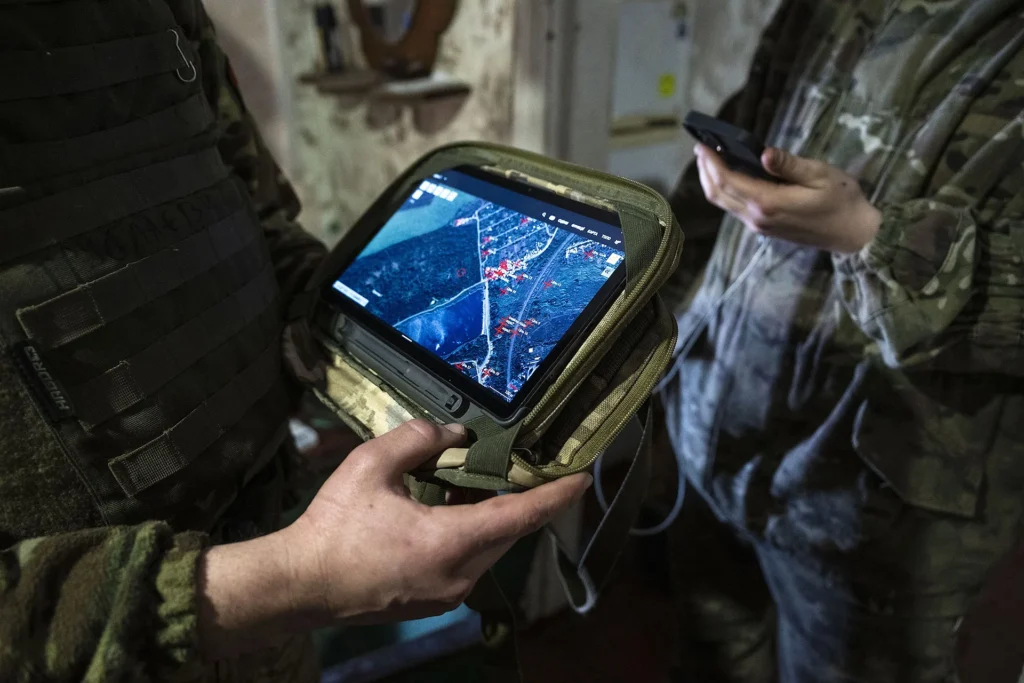
Global positioning system (GPS) handsets like these in use by the Ukrainian armed forces are vulnerable to electronic jamming.
Hyppönen isn’t alone. The Irish Aviation Authority, for instance, recently decided to keep ground-based radio navigation beacons in use because supposedly the more modern satellite-based global positioning system (GPS) has proven so susceptible to jamming in recent years.”Security by antiquity” is, it turns out, a quiet way of beating cyber-criminals, hackers and enemy attackers.Matt Bishop, a computer scientist and professor emeritus at the University of California, Davis, has tested this principle, somewhat by accident. Back in the 1990s, he and his colleagues set up a system connected to the internet and deliberately left it accessible so that they could catch hackers and bots attempting to breach it. This is a common cyber-security research technique known as a honeypot – a kind of trap set up in carefully controlled conditions.But the team picked an older software version for their honeypot that had been upgraded multiple times since its release and, consequently, no hackers bothered to target it. “When we upgraded it to the new one, we had all the attacks we wanted,” recalls Bishop. “I thought it was so amusing.”
This possibility of evading nefarious activity by sticking to old tech can take many forms. Both Bishop and Hyppönen say they have friends who refuse to get a smartphone. “One person I know [uses] a Nokia 9210,” says Hyppönen, referring to a simple, “dumb” mobile phone first released 25 years ago.
As technology has advanced, experts have often questioned whether the latest systems are actually more risky than older ones
While hackers can’t target it in quite the same way they might target a modern Android or iOS device, the phone’s operating system, Symbian, does have some old, known vulnerabilities. The flipside is that “nobody’s targeting them anymore”, adds Hyppönen. Similarly, the Nokia could be more at risk from techniques that snoop on phone calls. But how many people will bother? It’s a security trade-off.
As technology has advanced, experts have often questioned whether the latest systems are actually more risky than older ones. During the late 1990s, Bishop wrote a speech in which he argued that computers were “considerably less secure than the paper systems we still use, and that are rapidly being replaced”.Concerns about the shift from paper to digital technologies remain prevalent, especially when it comes to electronic voting systems. Some say electronic voting machines are desirable partly because they produce election results much more quickly than paper-based systems. That’s not enough to sway others, though.”Voting is the bedrock of our democracy,” says Hyppönen. “It’s one of the last things I’d like to weaken in any way, especially if the benefits are so small.”Militaries are also known for being reluctant to take chances. Even the world’s most active militaries are known to occasionally rely on old technologies for reasons of reliability and security. “One thing I’ve seen in places like Ukraine is the use of paper maps, or laminated maps, and compasses,” says Thomas Withington, associate fellow at the Royal United Services Institute, a think tank. “You can’t jam that.” It’s a kind of “analogue resilience”, he adds.

Concerns over the vulnerability of some electronic voting systems mean many elections are still carried out with paper forms
Jamming attacks hitting GPS-based navigation have forced some countries to make careful choices about which legacy technologies to retain, and which GPS alternatives to invest in, says Victor Tasiemski, a systems engineer at Overlook Systems Technologies, which works on navigation tech.
That’s exactly what happened in Ireland, where a programme to replace ground-based radio beacons has been slowed down in order to keep those beacons operating for longer. A spokeswoman for the Irish Aviation Authority told the Irish Times in June that the beacons were being retained “as part of a planned resilience strategy”.Technologists who work with militaries are familiar with the challenge of designing systems that can link old and new technologies together. Stefan Kraus is co-founder and chief technical officer of Kraus Hamdani Aerospace, which has designed a drone-based communications platform that can connect military personnel to one another, no matter whether they are using older radios or newer ones. Military radio tech that has been around for decades is “tried, tested and secure”, he says. “The US military isn’t going away from that.”
Last Updated on August 24, 2026 by Grace Simon

Summer 2026 Travel Hacks: 12 Smart Ways to Save Money and Travel Better
Summer is one of the best times to explore the world, but it’s also one of the busiest and most expensive travel seasons. The good news? With a little planning, you can enjoy an unforgettable vacation without overspending. Here are the best Summer 2026 travel hacks.
1. Book Flights Early
Booking your flights 6–10 weeks before your trip often gives you better prices than waiting until the last minute.
2. Travel Midweek
Flying on Tuesdays or Wednesdays is often cheaper than traveling on weekends.
3. Pack Light
A carry-on bag can save you baggage fees, speed up airport check-in, and make moving around much easier.
4. Choose Less Crowded Destinations
Instead of visiting the most popular tourist hotspots, explore nearby towns or underrated destinations for a more relaxed and affordable experience.
5. Download Offline Maps
Save maps before your trip so you can navigate without using mobile data.
6. Bring a Reusable Water Bottle
Stay hydrated and reduce spending on bottled water while traveling.
7. Use Public Transportation
Buses, trains, and metro systems are usually much cheaper than taxis or ride-sharing services.
8. Book Accommodation with a Kitchen
Preparing a few meals yourself can significantly reduce food costs during your trip.
9. Keep Digital Copies of Important Documents
Save copies of your passport, visa, travel insurance, and bookings in secure cloud storage and on your phone.
10. Notify Your Bank Before Traveling
If you’re traveling internationally, let your bank know in advance to avoid unexpected card blocks.
11. Buy Travel Insurance
A small investment in travel insurance can save you from major expenses if your trip is delayed, canceled, or interrupted.
12. Leave Room for Spontaneous Adventures
Don’t schedule every minute. Some of the best travel memories come from unexpected discoveries.
Final Thoughts
The best Summer 2026 trips aren’t necessarily the most expensive—they’re the ones planned wisely. Travel smart, spend carefully, stay safe, and make memories that will last a lifetime.

Technology is evolving faster than ever, with groundbreaking innovations transforming healthcare, transportation, communication, and everyday life. From intelligent robots to life-changing medical breakthroughs, these discoveries are reshaping the future in remarkable ways.
1. AI Agents That Can Complete Real-World Tasks
Artificial intelligence has evolved beyond simple chatbots. Modern AI agents can handle complex, multi-step tasks such as scheduling meetings, analyzing large datasets, drafting reports, writing code, and assisting businesses with customer service.
These AI systems are becoming valuable assistants in workplaces, helping employees save time and improve productivity. In healthcare, they help summarize medical records, while in education they can personalize learning experiences for students.
Why it matters:
- Saves hours of repetitive work
- Improves business efficiency
- Supports education and healthcare
- Makes advanced technology more accessible
⸻
2. Gene-Editing Advances for Treating Genetic Diseases
Scientists continue to improve gene-editing technologies that target the root causes of certain inherited diseases. Instead of only treating symptoms, these therapies aim to correct specific genetic changes in the body.
Researchers are studying gene-editing approaches for conditions such as sickle cell disease and some inherited blood disorders, offering hope for treatments that could provide long-term benefits.
Why it matters:
- May improve treatment for inherited diseases
- Advances personalized medicine
- Could improve quality of life for many patients
⸻
3. Electric Air Taxis
Several companies are testing electric vertical takeoff and landing (eVTOL) aircraft designed for short trips within and around cities. These aircraft are intended to reduce traffic congestion while producing less noise and fewer emissions than conventional helicopters.
Although widespread commercial use is still developing, pilot programs and certification efforts continue in several countries.
Why it matters:
- Could reduce travel time in crowded cities
- Produces fewer emissions than many traditional aircraft
- Represents a new form of urban transportation
⸻
4. Humanoid Robots in the Workplace
Humanoid robots are becoming more capable of performing repetitive or physically demanding tasks in warehouses, factories, hospitals, and research facilities. Equipped with advanced sensors and AI, they can navigate environments, move objects, and assist human workers.
These robots are designed to complement people rather than replace every job, especially in roles where labor shortages exist.
Why it matters:
- Helps address workforce shortages
- Improves workplace safety
- Increases productivity in repetitive tasks
⸻
5. Brain–Computer Interface Technology
Brain–computer interfaces (BCIs) are systems that enable direct communication between the brain and external devices. Researchers are developing BCIs to help people with certain paralysis or neurological conditions control computers, communication devices, or prosthetic limbs using brain signals.
While still an emerging field, ongoing research continues to improve safety and performance.
Why it matters:
- Could restore communication for some people with severe disabilities
- Supports advanced prosthetic control
- Expands possibilities for assistive technology
Final Thoughts
The technologies emerging in 2026 are pushing the boundaries of what’s possible. While many are still developing, advances in AI, medicine, robotics, transportation, and brain–computer interfaces have the potential to improve lives, transform industries, and shape the future in profound ways. As these innovations continue to mature, they are likely to become an increasingly important part of everyday life.
Last Updated on July 21, 2026 by Grace Simon

“Security By Antiquity Why Older Tech is Sometimes Safer From Hackers

California calls off meeting with Paramount over WBD takeover, NYT reports

A timeline of US strikes on boats that have killed at least 223

2026 Best Summer Airline Reviews: Top Airlines for Comfort, Service & Value

Naturally Seeds for Weight Loss & How To Use It.
Top 10 Countries With Strong Economies Where You May Be Able to Get a Work Visa for Under $8,000 (2026)

Pretty Girl Guide.

Top Airlines Offering Summer 2026 Travel Deals

Top 10 Hidden Lessons Everyone Learned From the 2026 FIFA World Cup

The Best Budget Travel Destinations for 2026

Cosmetic Products to Avoid After 45 Due to Potential Skin Damage
Essential Guide to Dog Vaccinations: Key Information for Your Pet’s Health.

Top five most expensive bags in the world.

Understanding Postpartum Depression: Effective Strategies for Coping

Stage 1 Dieting Meal Plan for Weight Loss Benefits and Guidelines.

Beginners makeup process.

5 Nutritious Meal Ideas for a Healthy Routine

Top Easy Online Jobs You Can Do from Home in 2024.

Every Morning, I Take a Ginger Shot—Here’s Why

The Country with the Highest Fluency in English Among Non-Native Speakers.
“Security By Antiquity Why Older Tech is Sometimes Safer From Hackers
California calls off meeting with Paramount over WBD takeover, NYT reports
A timeline of US strikes on boats that have killed at least 223
Cosmetic Products to Avoid After 45 Due to Potential Skin Damage
Essential Guide to Dog Vaccinations: Key Information for Your Pet’s Health.