
Technology
How Technology Is Transforming the Future of Global Business

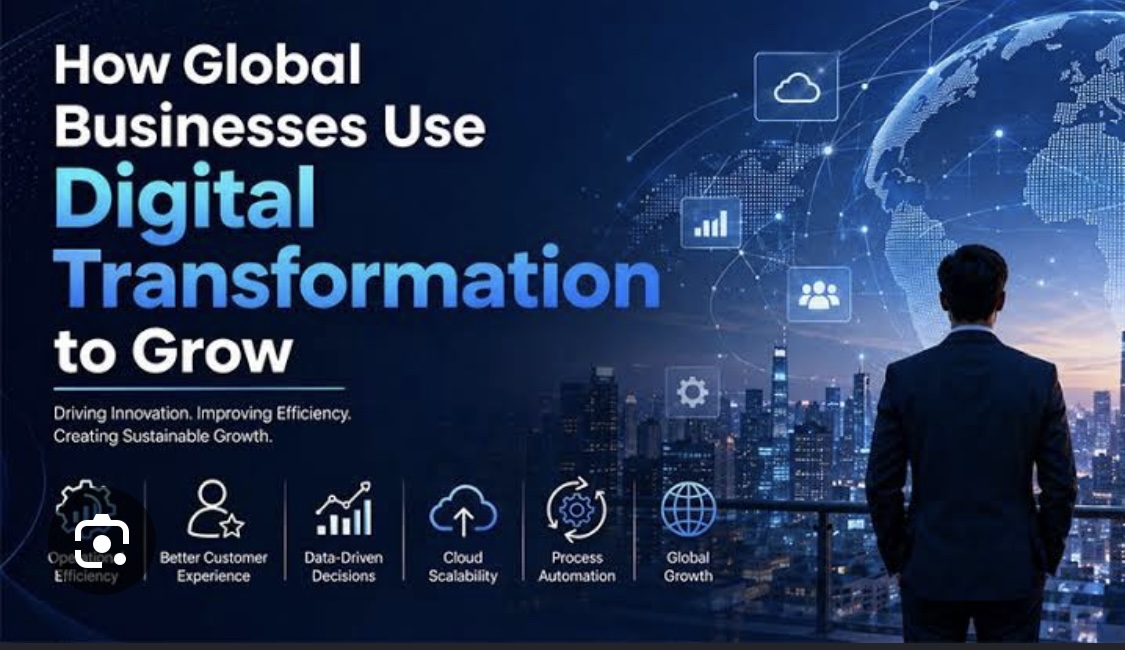
How Technology Is Transforming the Future of Global Business
Technology is changing how businesses operate, communicate and reach customers across the world. From artificial intelligence and automation to cloud computing and digital marketing, modern innovations are creating new opportunities for businesses of all sizes.
Today, companies are embracing digital solutions to improve productivity, reduce operational costs and remain competitive in an increasingly connected global economy.
Artificial Intelligence and Automation
Artificial intelligence is helping businesses automate routine tasks, improve customer service and make smarter decisions. AI-powered tools are also allowing companies to analyse customer behaviour and develop more effective business strategies.
Digital Marketing and Global Reach
Digital marketing has made it easier for brands to reach international audiences. Through SEO, social media, email marketing and online publications, businesses can increase visibility and connect with potential customers worldwide.
Cloud Computing and Remote Work
Cloud technology allows businesses to manage information, collaborate and access important resources from anywhere. Combined with remote working tools, it has made international business operations more flexible.
The Growing Importance of Cybersecurity
As businesses become more dependent on digital platforms, protecting customer information and company data is increasingly important. Cybersecurity solutions help organisations build trust and protect their operations.
Conclusion
Technology will continue to shape the future of global business. Companies that embrace innovation, invest in digital solutions and adapt to changing customer expectations will be better positioned for long-term growth.
For businesses worldwide, digital transformation is no longer just an advantage; it is becoming essential for success.
Share Your Brand Story With Gracy News
Gracy News welcomes contributions from businesses, entrepreneurs, technology companies and industry professionals. We offer opportunities for guest articles, sponsored content, brand features and business promotions.
Contact our editorial team to explore publishing and collaboration opportunities.
Last Updated on November 11, 2026 by Grace Simon


- Always stay a few steps ahead. Think beyond the present and prepare for the unexpected.
- Say less and observe more. Not everything deserves a response.
- Never reveal your next move. Keep some plans to yourself.
- Let people underestimate you; you don’t always have to prove yourself.
- Don’t make yourself too accessible. Learn to create boundaries.
- Imagine the impossible and prepare for situations nobody expects.
- Never explain yourself to people who are committed to misunderstanding you.
- Give 45% of what you have and keep the remaining 55% for yourself.
- Pay attention to actions, not promises. People reveal themselves through consistency.
- Sometimes, do what nobody expects you to do. Stay unpredictable.
- Not everything is spiritual; sometimes, people are simply responsible for their actions.
- Learn to walk away without announcing your departure.
- Cry it out in silence, heal privately, and keep moving.
- Don’t let emotions make decisions that your future will regret.
- Don’t be overly excited about every free gift; sometimes, generosity comes with hidden intentions.
- Be an overthinker sometimes. Think beyond what is immediately visible.
- Never put all your trust, plans, or resources in one place. Always have a backup plan.
- Don’t be too available. Let people understand that your time and presence have value.
- Learn to read between the lines. Not everyone means well.
- Remember, silence sometimes speaks louder than a thousand words.
- Keep trying until your last breath.
Last Updated on November 12, 2026 by Grace Simon

The Rise of Digital Banking: How Fintech Is Changing the Way We Manage Money
The financial industry is experiencing a major transformation as digital banking and financial technology (fintech) reshape how people manage, save and transfer money. From mobile banking applications to online payment platforms, technology is making financial services faster, more accessible and convenient.
Today, individuals and businesses can manage financial transactions without depending entirely on traditional banking systems. This shift is creating new opportunities for financial institutions, technology companies and digital entrepreneurs worldwide.
1. Mobile Banking Is Changing Financial Services
Mobile banking applications allow customers to check balances, transfer money, pay bills and manage accounts from their smartphones. This convenience has changed customer expectations and encouraged traditional banks to improve their digital services.
2. Fintech Is Making Payments Easier
Digital wallets, payment gateways and online transfer platforms are simplifying transactions across international markets. Businesses can receive payments online, while customers enjoy faster and more flexible payment options.
3. Artificial Intelligence Is Improving Banking
Financial institutions are increasingly using artificial intelligence to detect suspicious transactions, improve customer support and analyse financial activities. These innovations help create more efficient and personalised banking experiences.
4. Digital Banking Is Expanding Financial Access
Fintech solutions are creating opportunities for individuals and businesses that previously faced difficulties accessing traditional financial services. Digital accounts, online lending platforms and mobile payment solutions are helping expand access to financial products.
5. Security Remains a Major Priority
As financial transactions move online, cybersecurity has become increasingly important. Digital banks and fintech companies are investing in encryption, identity verification and fraud detection to protect customers and maintain trust.
Conclusion
Digital banking is changing the future of financial services. As fintech continues to evolve, businesses and consumers will benefit from more convenient payment systems, innovative financial products and improved access to digital financial services.
Companies that embrace financial technology and prioritise security, innovation and customer experience will be better positioned in the evolving global financial market.
Technology
Why Half of All M2 Buyers Refuse to Give Up the Clutch Pedal
M CEO Frank van Meel ties the M2 manual take rate directly to the M3 CS Handschalter.

Every second G87 BMW M2 sold in the United States comes with a manual transmission, according to M CEO Frank van Meel. He didn’t offer that number as a standalone fact. He used it to explain a separate decision: why BMW built the M3 CS Handschalter, a limited-run manual-only special edition that sold out almost as soon as it went on sale.
A 50 percent take rate on a manual gearbox would be a remarkable number for any car in 2026. The M2 is a sports coupe that could have shipped without a clutch pedal at all and nobody at BMW would have batted an eye, given how the rest of the segment has gone. Van Meel didn’t frame it as a surprise, though. He used it as evidence for a broader point about U.S. demand, then pointed straight at the payoff: “Rear-wheel drive and a manual transmission are the dream combination for many purists. That is why we also made a limited model with a manual transmission for the U.S. Demand was enormous; the car was practically sold out immediately.”
That “limited model” isn’t a special M2. It’s the M3 CS Handschalter, a rear-wheel-drive-only, manual-only version of the outgoing M3 built specifically for North America. Van Meel is drawing a straight line between the two cars: the M2’s take rate is the data point, the CS Handschalter is what BMW did about it. Whether that translates into a manual staying on the order sheet for the next M3, or the next M2, is a separate question van Meel didn’t answer directly. But the number he did give is hard to argue with, and it’s worth putting the CS Handschalter in context alongside the rest of BMW’s shrinking manual lineup.
Where The CS Handschalter Fits

The M3 CS Handschalter starts at $108,450 and undercuts the automatic, xDrive-based M3 CS by roughly $11,000. It’s rear-wheel drive only, manual only, built specifically for North America, and BMW hasn’t said how many it’s making. We’re estimating around 600-700 units. It also arrives as the current G80 M3’s likely send-off: the model is expected to wind down around February 2027, and its replacement is widely reported to drop the manual entirely in favor of xDrive-only, automatic-only power. If that holds, the CS Handschalter isn’t just a limited edition riding on the M2’s popularity. It’s the last manual M3 BMW will ever build.
The Z4 M40i used to round out BMW’s manual lineup, but that ended in the spring, when the G29 went out of production with a Final Edition and no confirmed successor. That leaves the M2, base M3, and base M4 as the only manual BMWs sold in the U.S. today, and with the M3’s replacement reportedly going automatic-only, the M2 may end up the one holdout still standing once the CS Handschalter’s run is over.
Now the question is this: it’s the BMW M2 manual story getting ready for a new chapter? Time will tell…
Last Updated on August 26, 2026 by Grace Simon

21 LAWS OF SURVIVAL

The Rise of Digital Banking: How Fintech Is Changing the Way We Manage Money

How Technology Is Transforming the Future of Global Business

From University Student to Startup Founder: The Journey Behind The College Date

NewsTrump proposes $70,000 fee, $30,000 renewal for Nigerian, other foreign students seeking jobs

The Most Anticipated Games Coming Before the End of 2026

Canada lists 3 work permit requirements for foreign workers

2027: INEC Releases NASS Final List Of Candidates

Boat carrying 267 people capsizes off northern Cyprus

Chelsea sign Argentina’s Goalkeeper Martinez From Villa

Cosmetic Products to Avoid After 45 Due to Potential Skin Damage
Essential Guide to Dog Vaccinations: Key Information for Your Pet’s Health.

Beginners makeup process.

Top five most expensive bags in the world.

Understanding Postpartum Depression: Effective Strategies for Coping

Cheap Flight Hacks Airlines Don’t Want You to Know ✈️💸

Stage 1 Dieting Meal Plan for Weight Loss Benefits and Guidelines.

Top Easy Online Jobs You Can Do from Home in 2024.

5 Nutritious Meal Ideas for a Healthy Routine

The Country with the Highest Fluency in English Among Non-Native Speakers.
21 LAWS OF SURVIVAL
The Rise of Digital Banking: How Fintech Is Changing the Way We Manage Money
How Technology Is Transforming the Future of Global Business
Cosmetic Products to Avoid After 45 Due to Potential Skin Damage
Essential Guide to Dog Vaccinations: Key Information for Your Pet’s Health.